Front Description
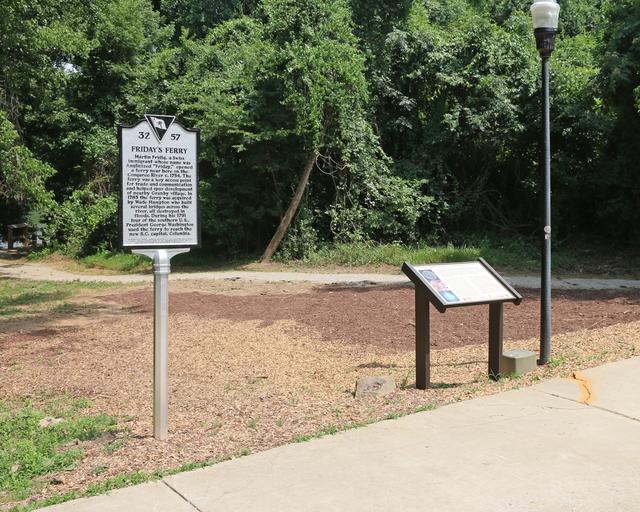
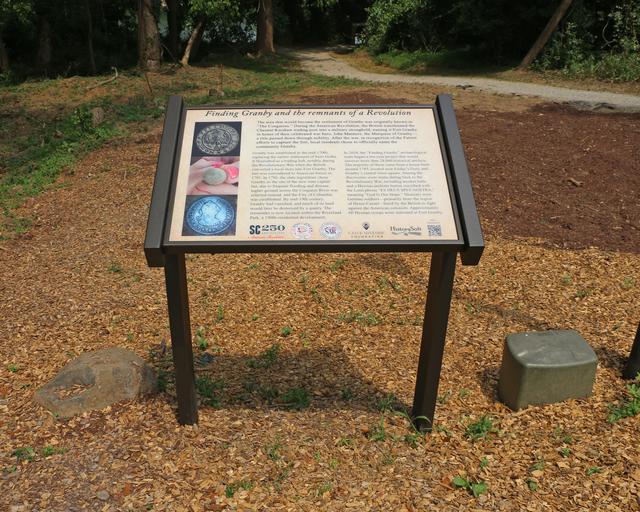
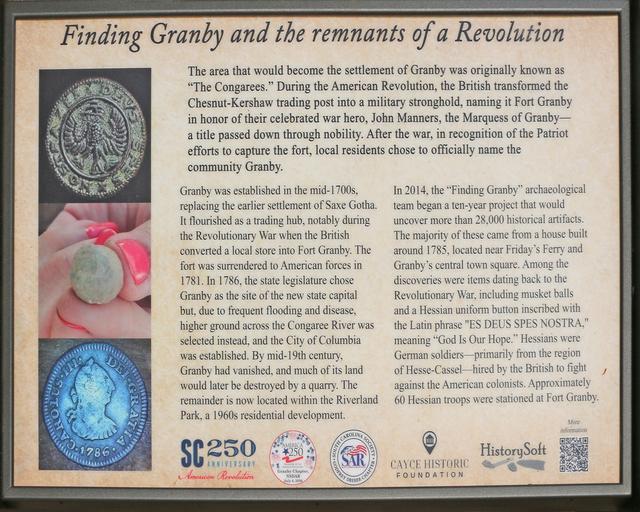
The area that would become the settlement of Granby was originally know as “The Congarees.” During the American Revolution, the British transformed the Chestnut-Kershaw trading post into a military stronghold, naming it Fort Granby in honor of their celebrated war hero, John Manners, the Marquess of Granby – a title passed down through nobility. After the war, in recognition of the Patriot efforts to capture the fort, local residents chose to officially name the community Granby.
Granby was established in the mid-1700s, replacing the earlier settlement of Saxe Gotha. It flourished as a trading hub, notably during the Revolutionary War when the British converted a local store into Fort Granby. The fort was surrendered to American forces in 1781. In 1786, the state legislature chose Granby as the site of the new state capital but, due to frequent flooding and disease, higher ground across the Congaree River was selected instead, and the City of Columbia was established. By mid-19th century, Granby had vanished, and much of its land would later be destroyed by a quarry. The remainder is now located within the Riverland park, a 1960s residential development.
In 2014, the “Finding Granby” archaeological team began a ten-year project that would uncover more than 28,000 historical artifacts. The majority of these came from a house built around 1785, located near Friday’s Ferry and Granby’s central town square. Among the discoveries were items dating back to the Revolutionary War, including musket balls and a Hessian uniform button inscribed with the Latin phrase “ES DEUS SPES NOSTRA,” meaning “God Is Our Hope.” Hessians were German soldiers–primarily from the region of Hesse-Cassel—hired by the British to fight against the American colonists. Approximately 60 Hessian troops were stationed at Fort Granby.
Site Photos