Front Description
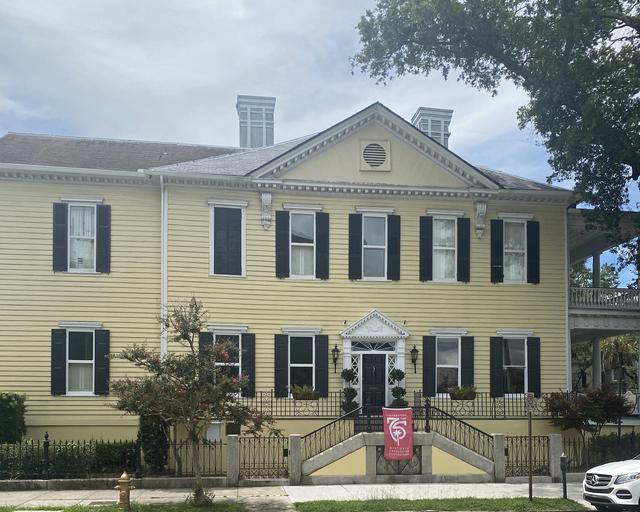
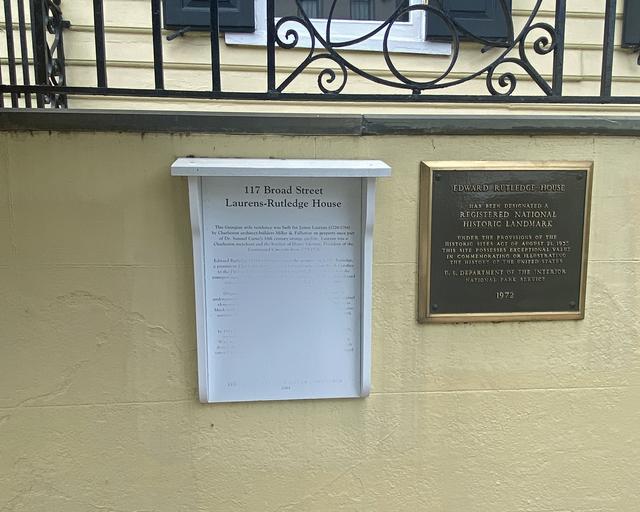
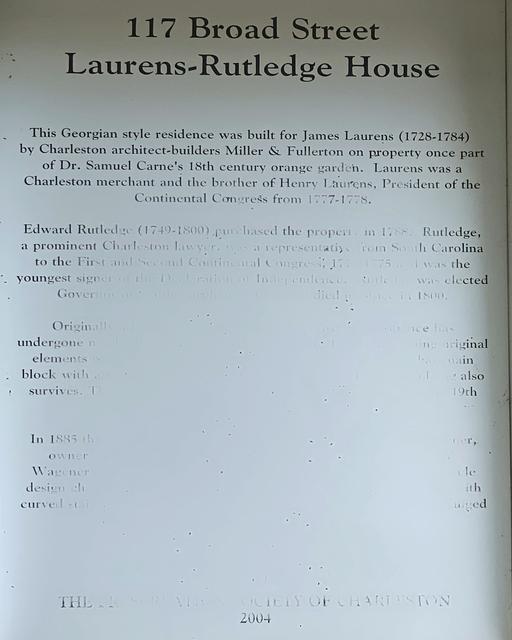
This Georgian-style residence was built c. 1760 for James Laurens (1728-1784) at the direction of Charleston architect-builders Miller & Fullerton on property once part of Dr. Samuel Carne’s 18th-century orange garden. Laurens was a Charleston merchant and the brother of Henry Laurens, President of the Continental Congress from 1777-1778.
Edward Rutledge (1749-1800) purchased the property in 1788. Rutledge, a prominent Charleston lawyer, was a representative from South Carolina to the First and Second Continental Congress from 1774-1775 and was the youngest signer of the Declaration of Independence at age 26. Rutledge was elected Governor of South Carolina in 1798 and died in office in 1800.
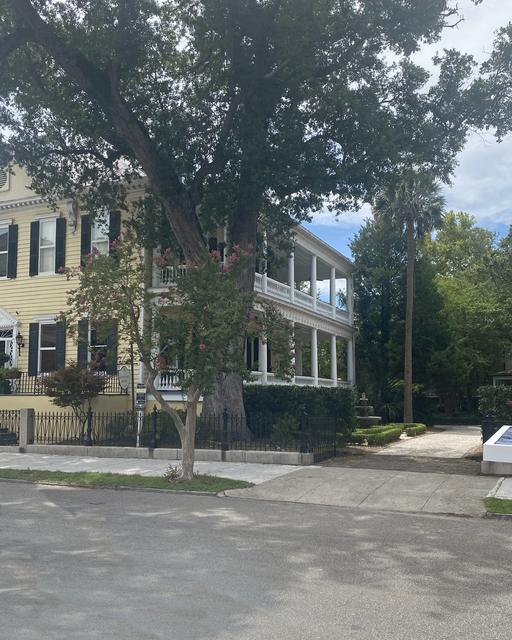
Originally a two-story Georgian double house, the residence has undergone much change since its construction. Remaining original elements of the house include the steeply pitched roof and a five-bay main block with a projecting pediment. The original rear kitchen building also survives. The Greek Revival piazzas on the east and west ends are early 19th-century additions.
In 1885 the property was acquired by Captain Frederick W. Wagener, owner of Charleston’s largest grocery wholesale company, F. W. Wagener & Company. Wagener added a wing on the east end, made design changes in the front entrance, and created a Victorian foyer with a curved staircase. Dr. Josiah Smith bought the house in 1935 and changed the exterior to its present Colonial Revival style.
About This Site
View from public sidewalk only
Site Photos