Front Description
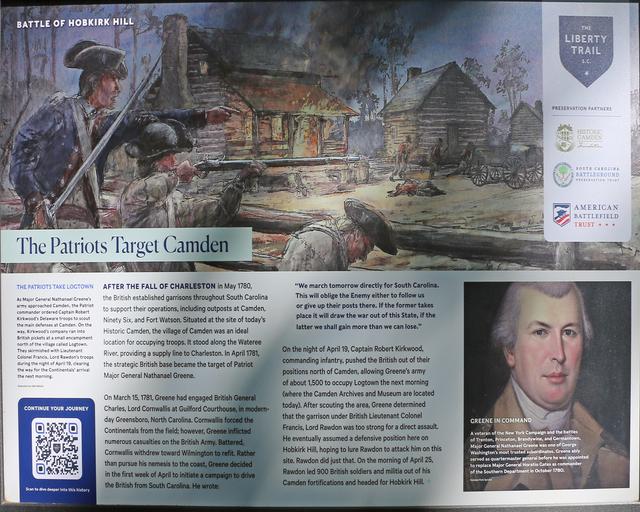
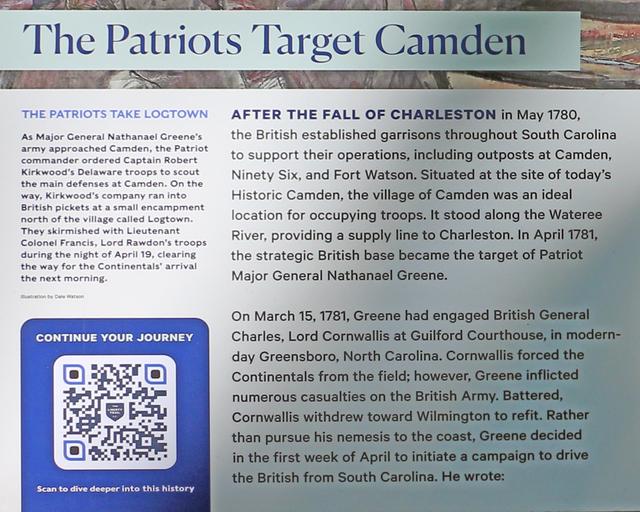
THE PATRIOTS TAKE LOGTOWN: As Major General Nathanael Greene’s army approached Camden, the Patriot commander ordered Captain Robert Kirkwood’s Delaware troops to scout the main defenses at Camden. On the way, Kirkwood’s company ran into British pickets at a small encampment north of the village called Logtown. They skirmished with Lieutenant Colonel Francis, Lord Rawdon’s troops during the night of April 19, clearing the way for the Continentals’ arrival the next morning.
AFTER THE FALL OF CHARLESTON in May 1780, the British established garrisons throughout South Carolina to support their operations, including outposts at Camden, Ninety Six and Fort Watson. Situated at the site of today’s Historic Camden, the village of Camden was an idea location for occupying troops. It stood along the Wateree River, providing a supply line to Charleston. In April 1781, the strategic British base became the target of Patriot Major General Nathanael Greene.
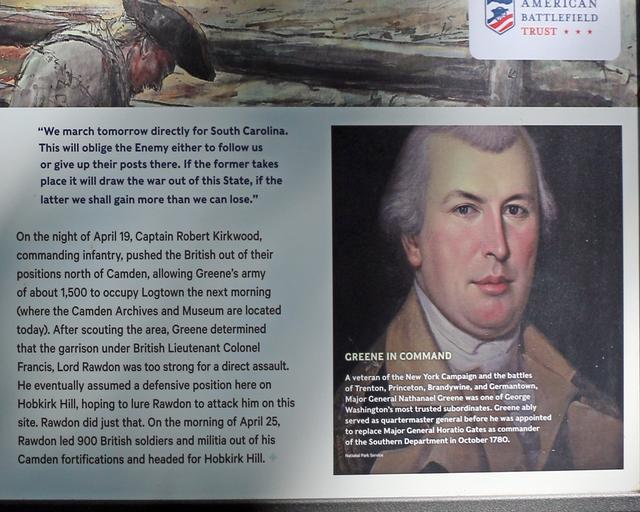
On March 15, 1781, Greene had engaged British General Charles, Lord Cornwallis at Guilford Courthouse, in modern-day Greensboro, North Carolina. Cornwallis forced the Continentals from the field; however, Greene inflicted numerous causalities on the British Army. Battered, Cornwallis withdrew towards Wilmington to refit. Rather than pursue his nemesis to the coast, Greene decided in the first week of April to initiate a campaign to drive the British from South Carolina. He wrote: “We march tomorrow directly for South Carolina. This will oblige the enemy either to follow us or give up their post there. If the former takes place it will draw the war out of this State, if the latter we shall gain more than we lose.”
On the night of April 19, Captain Robert Kirwood, commanding infantry, pushed the British out of their position north of Camden, allowing Greene’s army of about 1,500 to occupy Logtown the next morning (where the Camden Archives and Museum are located today). After scouting the area, Greene determined that the garrison under British Lieutenant Colonel Francis, Lord Rowden was too strong for a direct assault. He eventually assumed a defensive position here on Hobkirk Hill, hoping to lure Rawdon to attack him on this site. Rawdon did just that. On the morning of April 25, Rowden led 900 British soldiers and militia out of his Camden fortifications and headed to Hobkirk Hill.
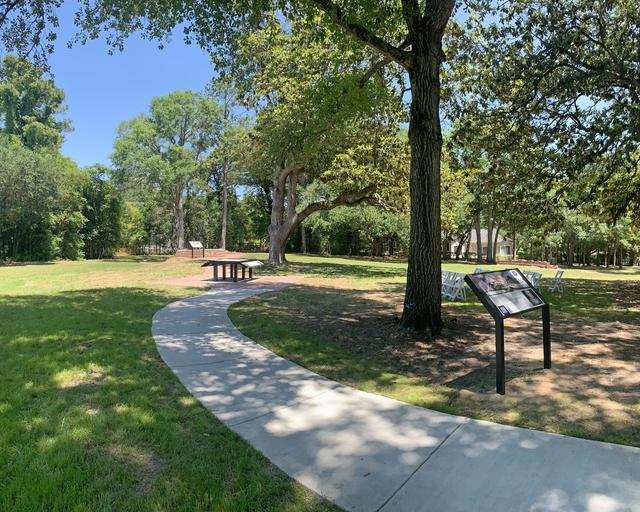
Site Photos